
Search
Search
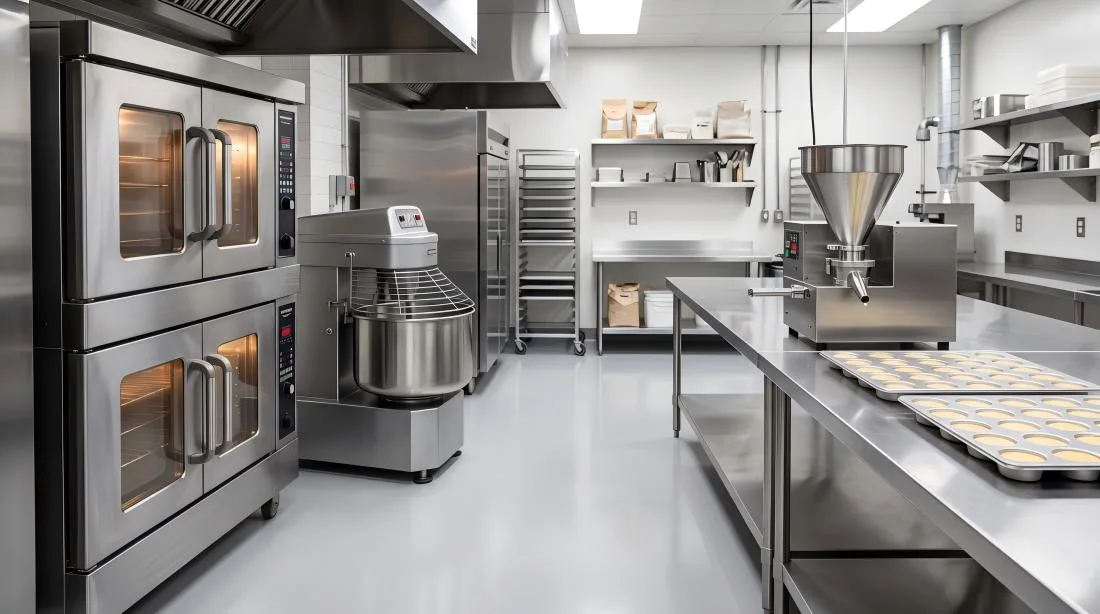
Outfitting a profitable storefront or mid-sized commissary requires more than culinary talent. Selecting the right commercial bakery equipment shapes your daily workflow, product consistency, and long-term operating costs.
Home bakers can get by with consumer-grade tools, but a growing business needs professional bakery equipment matched to its daily batch sizes and operating schedule. Making informed purchasing decisions early helps prevent operational bottlenecks as demand grows.
This guide breaks down essential bakery machines by product line, shares published retail price examples alongside used-equipment evaluation tips, and outlines the technical factors to verify before buying. Disclosure: HSENDA is our own brand. The product examples below illustrate specific automation options; actual suitability and financial returns depend on your menu, volume, and site conditions.
The main difference between consumer appliances and commercial baking equipment is rated workload and mechanical design. Businesses select commercial-grade units for their specific batch sizes, dough absorption ratios, and operating schedule. Always confirm the manufacturer’s rated capacity, permitted duty cycle, and maintenance schedule rather than assuming every commercial model can run continuously under full load.
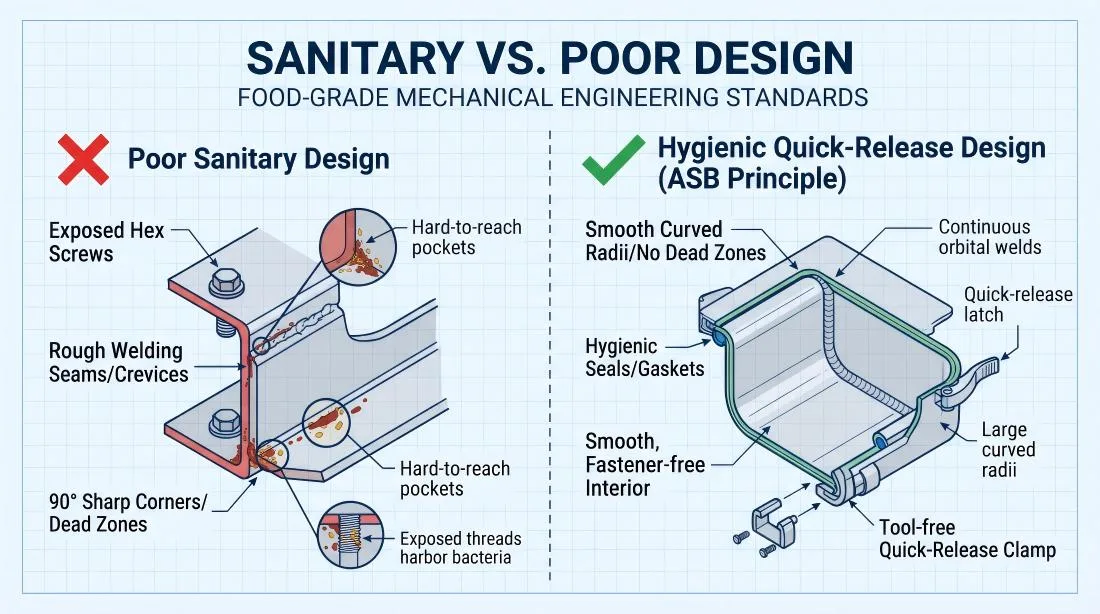
Beyond mechanical capacity, commercial machinery must meet applicable food safety standards such as the FDA Food Code. Suitable food-contact materials—such as food-grade 304 stainless steel or FDA-certified components—support corrosion resistance and cleanability. However, according to hygienic equipment design principles from the American Society of Baking (ASB), sanitation performance also depends on smooth surface finishes, sealed joints, drainage, tool-free accessibility, and validated dry or wet cleaning procedures tailored to the ingredients being processed.
A typical yeasted artisan bread line needs mixing and baking systems that develop gluten without overheating the dough. (Specialty items like boiled bagels require additional kettle or steaming stations.) For stiff or low-hydration doughs, compare the manufacturer’s capacity chart against your exact recipe. Two-speed spiral mixers are a common choice for bread production because the rotating bowl and hook knead heavy dough efficiently, though suitably rated heavy-duty planetary mixers can also handle demanding dough batches.
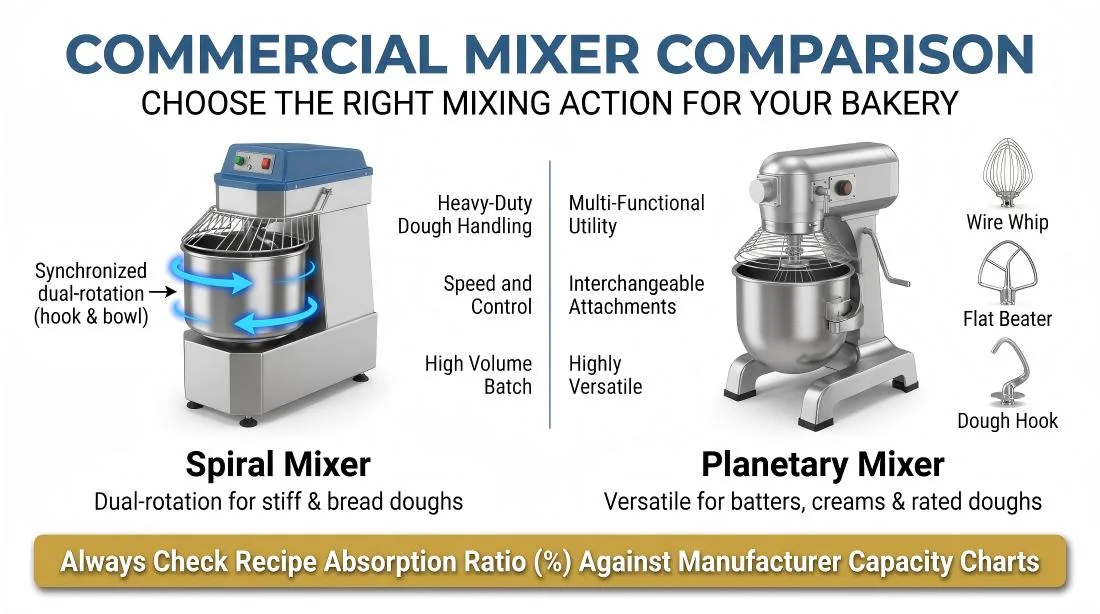
Once mixed, consistent fermentation and heat delivery dictate your final quality. Full-size insulated proofing cabinets maintain controlled warmth and humidity so yeast activates predictably across seasons. To finish the bake, steam-capable stone-hearth deck ovens provide strong bottom heat and moisture for crisp artisan crusts.
Patisseries and dessert shops rely on different core setups depending on their menu. Laminated pastries require refrigerated storage, dedicated worktables, and either manual rolling tools or a reversible dough sheeter. Meanwhile, cake and cookie lines often face bottlenecks because they require highly skilled labor for portioning and finishing. Where hand work limits daily output, compact cake production equipment, including depositors and finishing machines, can help streamline repetitive steps.
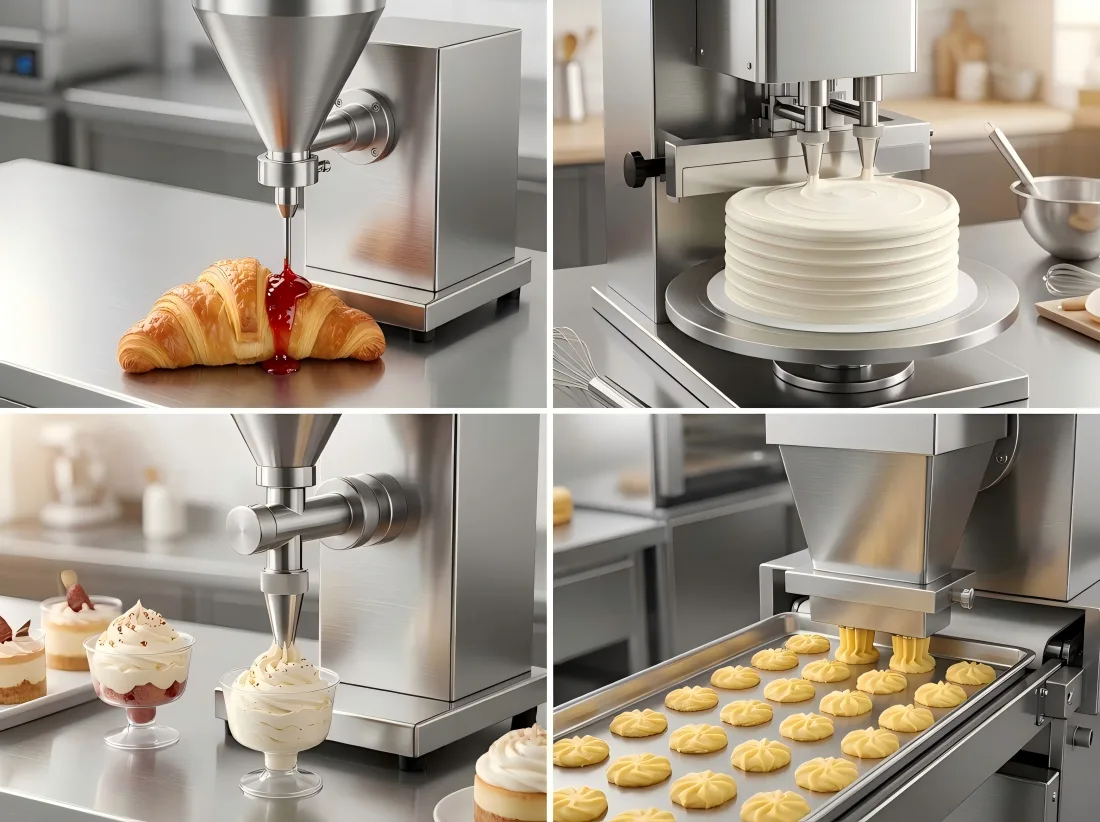
For shops with diverse menus and limited counter space, the HSENDA S10 Manual Cake Depositor (435x355x690mm, 20L hopper, single-phase 220V/50Hz, 0.4KW) pairs with interchangeable nozzles to handle batter depositing, croissant filling, and pastry injection. For higher-throughput tray production, the servo-driven HSENDA SR460 (single-phase 220V/50Hz, 2KW, 0.6Mpa air compressor required) and SP660 Cake Depositors dispense cupcake batters (≤60g) in about 2.5 seconds per cycle or full trays (~1500g) in 10 to 13 seconds.
Targeted automation can also address specific finishing and cookie extrusion bottlenecks:
Temperature control protects both raw ingredients and finished products. Reach-in refrigerators and retarder-proofers keep butter blocks firm for lamination and safely hold perishable fillings. In the storefront, refrigerated display cases maintain required holding temperatures for cream and custard items, while ambient cases suit dry baked goods.
If your bakery supplies cafes, grocery stores, or retail channels, automated packaging helps standardize presentation. The HSENDA UP450 and DP450 Film Flow Wrap Packing Machines use dual-frequency conversion, photoelectric eye tracking, and independent sealing-temperature controls to wrap products neatly. When paired with properly selected barrier films and validated sealing conditions, flow wrapping helps protect product freshness; always verify actual shelf life through testing with your specific recipe and storage environment.
Before finalizing your machinery budget, account for the foundational kitchen fixtures and smallwares required for daily operations and health code compliance:
Understanding bakery equipment costs requires looking at specific models rather than broad averages, because prices vary widely by brand, duty rating, and electrical specs. The table below lists published non-member retail prices from WebstaurantStore (verified in November 2026) alongside factory-quoted automation options. All figures exclude freight, taxes, utility upgrades, and smallwares.
| Equipment Category | Specific Model & Configuration | Published Retail Price / Quote (USD) | Selection & Capacity Note |
| Entry-Level 20 Qt. Planetary Mixer | Avantco MX20H (120V, 1.5 HP, bench model with guard) | $1,049.00 (Non-member retail) | Compare recipe-specific capacity and duty limits before use |
| 60 Qt. Commercial Spiral Mixer | Estella SM60 (240V, 4 HP, two-speed floor spiral mixer) | $2,249.00 (Non-member retail) | Check permitted batch weight against your recipe’s absorption ratio |
| Heavy-Duty 60 Qt. Planetary Mixer | Hobart Legacy+ HL600-1STD (200–240V, 2.7 HP floor mixer) | $28,492.80 (Non-member retail) | Compare recipe-specific capacity, controls, and service requirements |
| Single-Deck Electric Convection Oven | Blodgett ZEPHAIRE-200-E (Bakery depth, 220–240V, 1-Ph, 11kW) | $6,799.00 (Non-member retail) | Verify pan depth compatibility and electrical phase/amperage |
| Double-Deck Gas Convection Oven | Blodgett ZEPHAIRE-200-G (Bakery depth, natural gas, 120,000 BTU) | $13,598.00 (Non-member retail) | Requires appropriate gas hookup and compliant ventilation hood |
| Insulated Proofing Cabinet | Avantco HPI-1836 (Full-height, 120V, clear door, 36-pan capacity) | $1,399.00 (Non-member retail) | Compare insulation type and temperature/humidity control precision |
| Compact Depositors & Cookie Units | HSENDA S10 Manual Depositor / SC400 Cookie Machine | Request Custom Quote (Factory direct) | Reduces manual portioning time when volume justifies setup and cleaning |
| Automated Cake Finishing | HSENDA SD102 Cake Decoration Machine / S50 Whipper | Request Custom Quote (Factory direct) | Speeds up repetitive frosting and whipping on standardized lines |
Buying pre-owned gear is a practical way to lower startup costs on non-mechanical fixtures like stainless steel prep tables, sinks, sheet pans, and cooling racks. These items have no motors, sensors, or circuit boards that degrade over time.
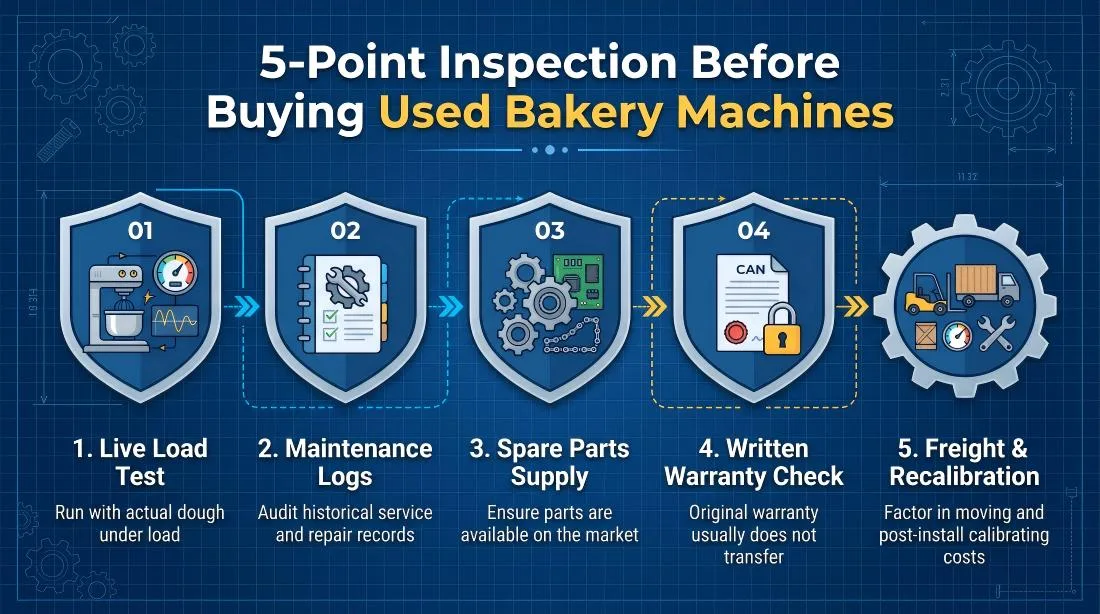
When considering used mechanical bakery machines—such as ovens, mixers, refrigeration, or depositors—weigh the upfront discount against potential repair and downtime risks. Do not assume the original manufacturer’s warranty transfers to a second owner (for example, Hobart’s standard commercial warranty applies strictly to the original end user); confirm any remaining manufacturer coverage and dealer-backed warranty in writing. Evaluate every pre-owned machine against five criteria before buying: live test-run performance under load, documented maintenance records, local spare parts availability, written warranty terms, and the cost of freight and recalibration.
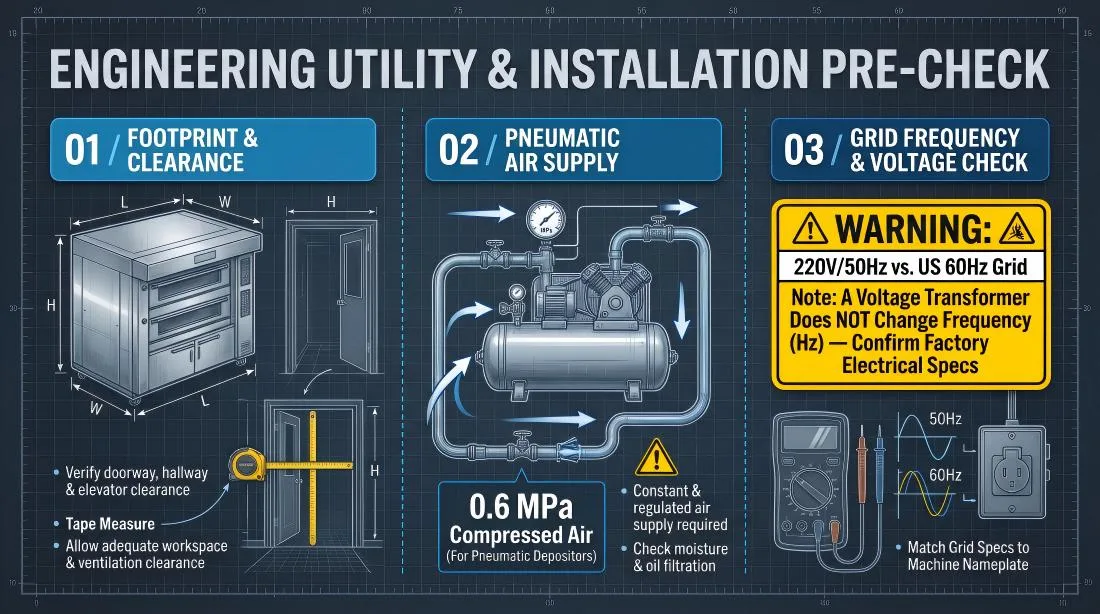
Before comparing equipment quotes, verify the exact machine dimensions, door clearances, and utility specs. Single-phase models may avoid the need for three-phase service, but the existing circuit and supply must still meet the machine’s requirements, including any compressed air needs (such as the 0.6 MPa air supply required for the HSENDA SR460). Confirm voltage, frequency, phase, current, and connection requirements for the exact machine configuration before ordering. US buyers using a 60Hz supply should obtain written confirmation of compatibility from the supplier. As Schneider Electric’s transformer frequency guidance explains, a voltage transformer does not change frequency; the equipment manufacturer must specify any required electrical conversion, and a qualified electrician must review it.
Complex disassembly adds labor hours between product runs and allergen changeovers. Prioritize bakery kitchen equipment engineered for straightforward sanitation. For example, the HSENDA SP660 Cake Depositor uses a tool-free disassembly design with no exposed screws on the cavity frame, so staff can strip, clean, and sanitize the hopper and piston cylinders faster, according to your wet or dry cleaning protocol.
Consumer demand shifts across seasons, so avoid single-purpose machines unless you have year-round volume for that item. Look for modular equipment that adapts to different recipes. Depositors and side-injecting machines like the HSENDA SR660 and S1260 accept interchangeable nozzles, allowing you to switch between sponge cakes, cupcakes, eclairs, and filled croissants (±0.5g weight accuracy) on the same base unit.
Buying machinery through a general reseller can complicate custom tooling and troubleshooting. Working directly with an export supplier like HSENDA provides initial custom layout proposals within 2 to 3 days. HSENDA works with manufacturers operating under ISO9001 quality management systems and provides model-specific CE compliance documentation, backed by pre-shipment factory test videos, a 12-month warranty (excluding wear consumables), and direct remote support from English-speaking engineers within 24 hours.
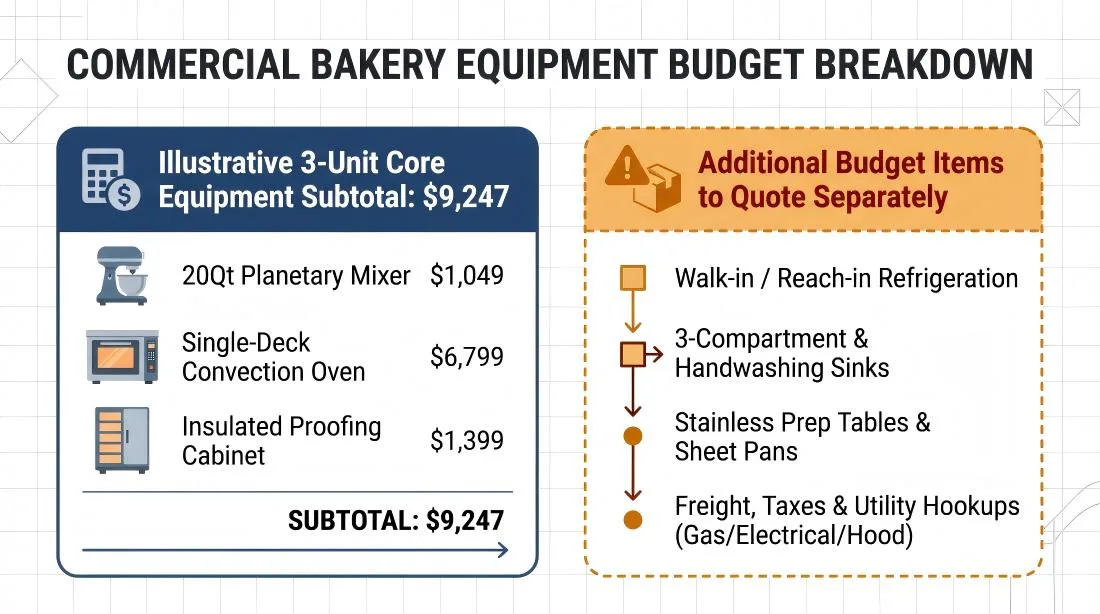
Build an equipment-only budget from itemized quotes for your mixer, oven, proofing equipment where needed, refrigeration, and prep fixtures. Total spending on small bakery equipment varies substantially with capacity, brand tier, condition, and what the premises already provides. For example, based on the published WebstaurantStore non-member retail prices in the table above, three core units alone—an entry-level 20 qt mixer ($1,049), a single-deck convection oven ($6,799), and an insulated proofer ($1,399)—total $9,247 before adding refrigeration, worktables, sinks, pans, freight, taxes, and utility installation.
You can source standard ovens, mixers, racks, and sinks from authorized restaurant equipment dealers. For specialized production machinery—such as cake depositors, cream whippers, horizontal cake slicers, and flow wrappers—sourcing directly from a specialized supplier like HSENDA allows you to customize nozzle geometries, review factory test reports before final payment, and coordinate export customs clearance.
Commercial baking equipment is built for retail bakeries, cafes, and commissaries that prioritize batch flexibility and frequent recipe changeovers. Industrial bakery equipment supports sustained high-volume production and may use automated batch, continuous, or hybrid processes. The distinction depends on throughput capacity, line integration, process controls, and material handling—not just machine size, power phase, or continuous flow.
No single machine guarantees the fastest payback for every shop; ROI depends on your bottleneck. However, finishing and portioning automation—such as the HSENDA SD102 Cake Decoration Machine or S10 Depositor—can offer attractive payback when manual icing or batter panning is a measured bottleneck and demand is sufficient. Compare net labor hours saved (after accounting for loading and cleaning time) and additional saleable output against the total installed investment and ongoing costs.
Selecting the right commercial bakery equipment requires matching mechanical capacity to your actual menu, batch sizes, and facility utilities. Start by securing reliable ovens, mixers, refrigeration, and sanitation fixtures, then evaluate compact depositing, decorating, and packaging automation where manual tasks hold back your output. Before placing an order, confirm your kitchen clearances, electrical voltage and frequency, compressed-air supply, and cleaning workflows. If you are evaluating customized depositing, cake finishing, or packaging machinery, contact HSENDA’s engineering team with your product specs and local utility requirements for a tailored proposal and quotation.