
Search
Search
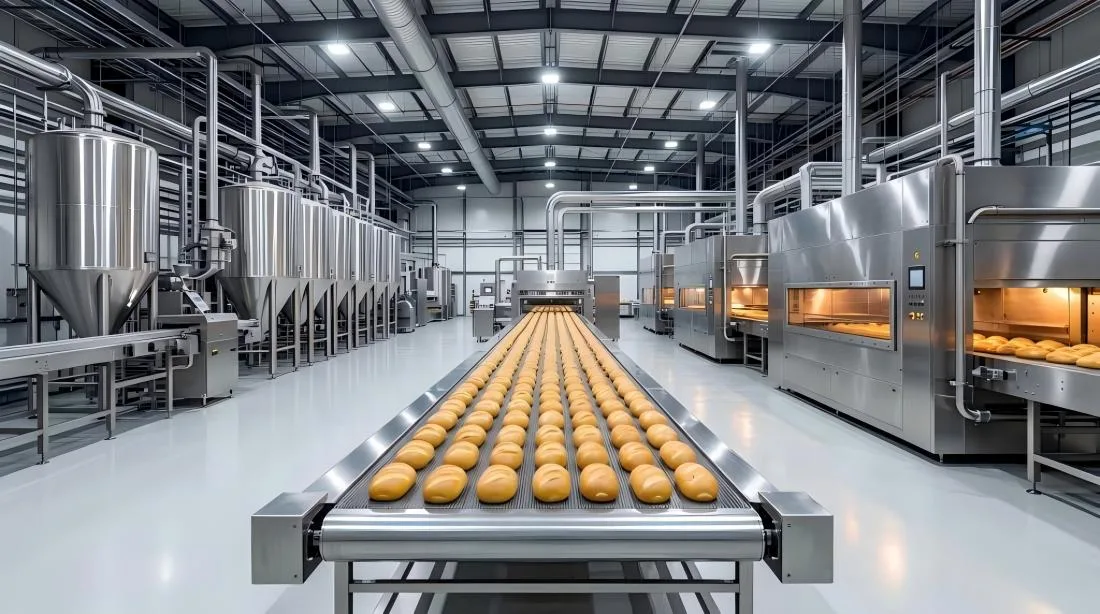
Moving from a busy commercial kitchen to an industrial bakery is a major operational step. Standalone machines give way to higher-capacity equipment and more integrated production systems, which may operate in automated batch, continuous, or hybrid modes. That shift changes how you plan capacity, labor, cleaning, and maintenance, not just which machines you buy.
Whether you are opening a new bread factory or upgrading an existing plant, your equipment choices shape your cost per unit and your ability to fill orders. This guide covers the core systems you need to scale with confidence, written for owners and plant managers who are comparing options.
We break down production equipment stage by stage, explain the integration mistakes that cost plants the most, and show how to evaluate manufacturers before a major upgrade. One note on scope: the HSENDA machines mentioned here cover depositing, filling, slicing, and packaging stations. Mixers, ovens, and bread makeup lines come from other specialist suppliers.
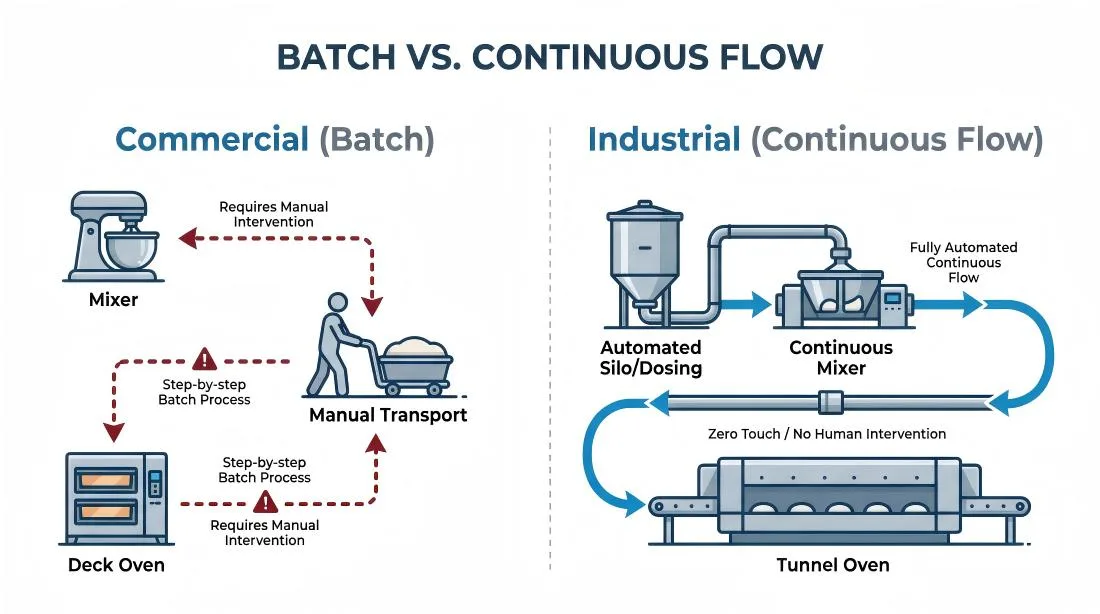
Industrial bakery equipment is designed for sustained high-volume production and may run as an automated batch, continuous, or hybrid system. Compared with standalone setups, the main differences are capacity, integration, controls, and the level of manual handling. The line between commercial and industrial is practical, not a formal standard.
In a commercial kitchen, a baker loads the mixer, waits for the cycle to finish, then moves the dough to a work station by hand. Each manual transfer takes time and labor. Over a full day, these handoffs limit production and increase labor costs.
An industrial line connects its stations with transfer pumps, conveyors, and shared controls. Product moves from ingredients to packaging with less handling. Fewer manual touches can mean steadier output and fewer chances for contamination, though hygiene still depends on equipment design and cleaning routines.
At industrial scale, ingredient handling moves from manual weighing to silo storage and automated dosing. Automatic dosing of flour and water keeps hydration consistent from batch to batch and reduces weighing errors. It still needs regular calibration and checks to stay accurate.
Bulk flour handling also requires dust control and a combustible dust hazard review by qualified specialists. Flour dust can pose an explosion risk under the wrong conditions, so plan collection, cleaning routines, and equipment selection with a safety professional before installing silos or pneumatic conveying.
Mixing is the heart of the dough room. Small commercial shops often use planetary mixers, while large plants usually choose spiral mixers or continuous systems for bread dough. Planetary models remain common for cake batters, creams, and other non-bread mixes, even in big facilities.
Several industrial spiral mixers handle several hundred kilograms of dough per batch. Rated capacity depends on recipe, hydration, and mixing cycle, so confirm it for your actual dough. Continuous mixers feed ingredients in and push mixed dough out without stopping, which suits plants running a few products at steady volume.
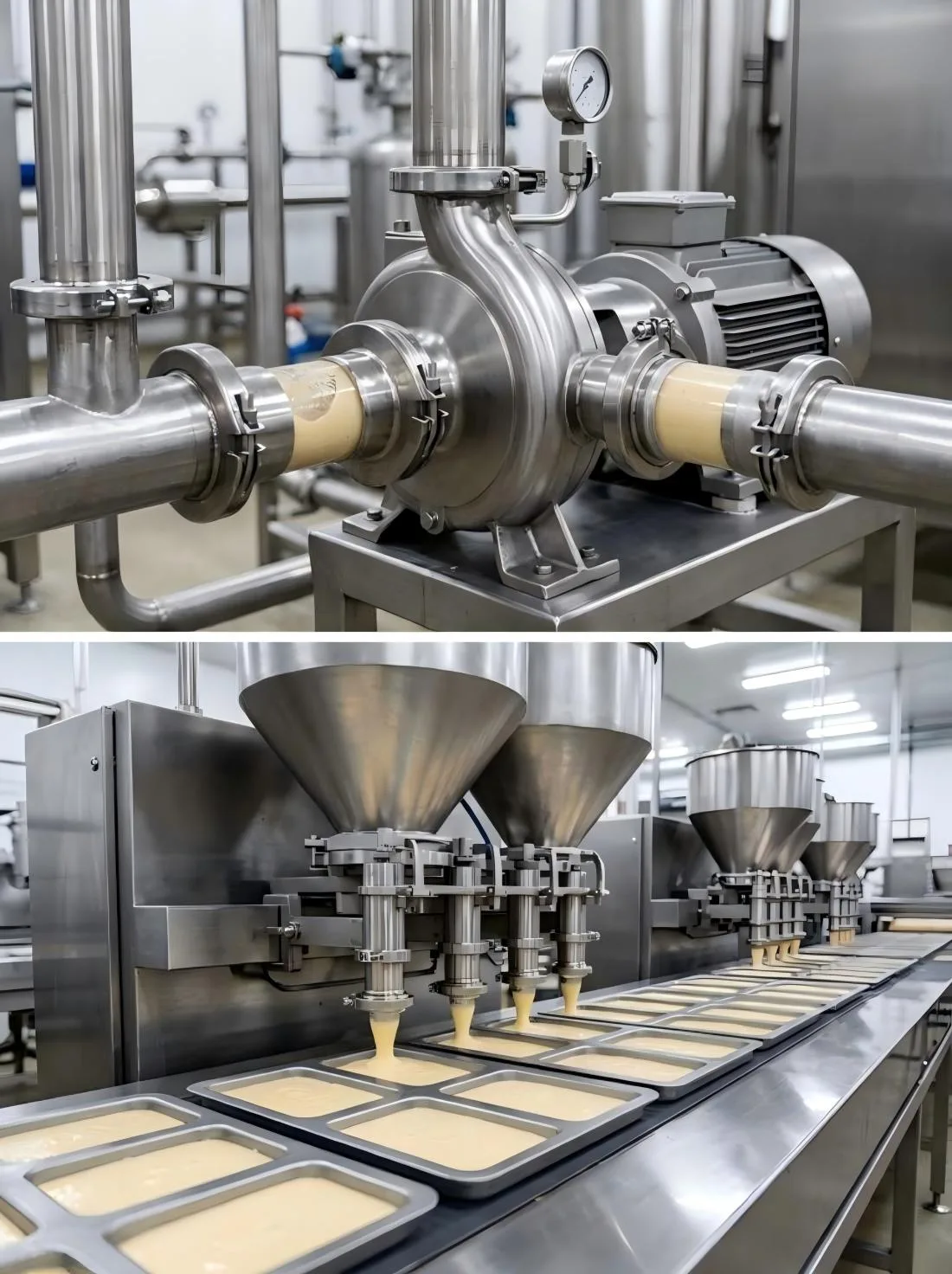
For bread, the steps between mixing and baking are dividing, rounding, intermediate resting, molding, and final proofing. Industrial lines automate these stations with dividers, rounders, intermediate proofers, molders, and proofing systems, usually from specialist bread line makers. Plan them before you choose an oven, because they decide dough handling and floor layout.
Moving material without damaging it is a real challenge on automated lines. Rough handling can damage texture, which matters most when crumb and structure define product quality. The right transfer method depends on whether you are moving stiff dough or fluid batter.
For fluid and semi-fluid materials such as cake batter, the HSENDA TP100 Transfer Pump replaces traditional cylinder lifting machines. It delivers material continuously and steadily with low noise and usually works alongside depositors. Stiff bread dough needs different handling equipment, so match the pump to the material.
Depositing comes next for cake and dessert lines. The HSENDA SP660 Cake Depositor uses servo-driven dosing for precise control and handles particle sizes from 0 to 10 mm. It suits products from sponge cake to pudding, which makes it a fit for plants that make filled or layered cakes, not bread lines.
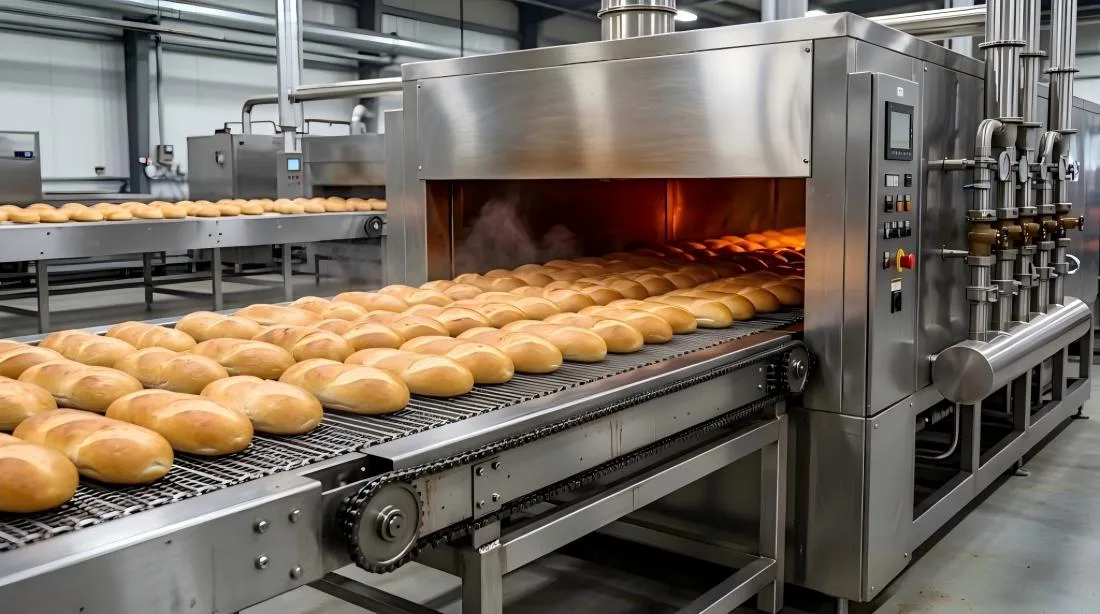
The oven often sets the ceiling for factory throughput, so plan early. Large plants typically choose tunnel ovens, or banks of rack ovens, depending on volume and product mix. The wrong choice can leave expensive downstream machines waiting for product.
In a tunnel oven, dough enters on a conveyor belt, passes through temperature-controlled zones, and exits fully baked at the other end. This continuous design often suits high-volume lines with a limited product range. It also pairs well with automatic loading and unloading systems.
Rack ovens often suit plants with a wider product mix or medium volumes. Full racks of pans rotate inside the oven, which helps heat reach products evenly. Handling can need more labor than a tunnel oven, and product changes involve baking settings and cleaning, not just swapping racks.
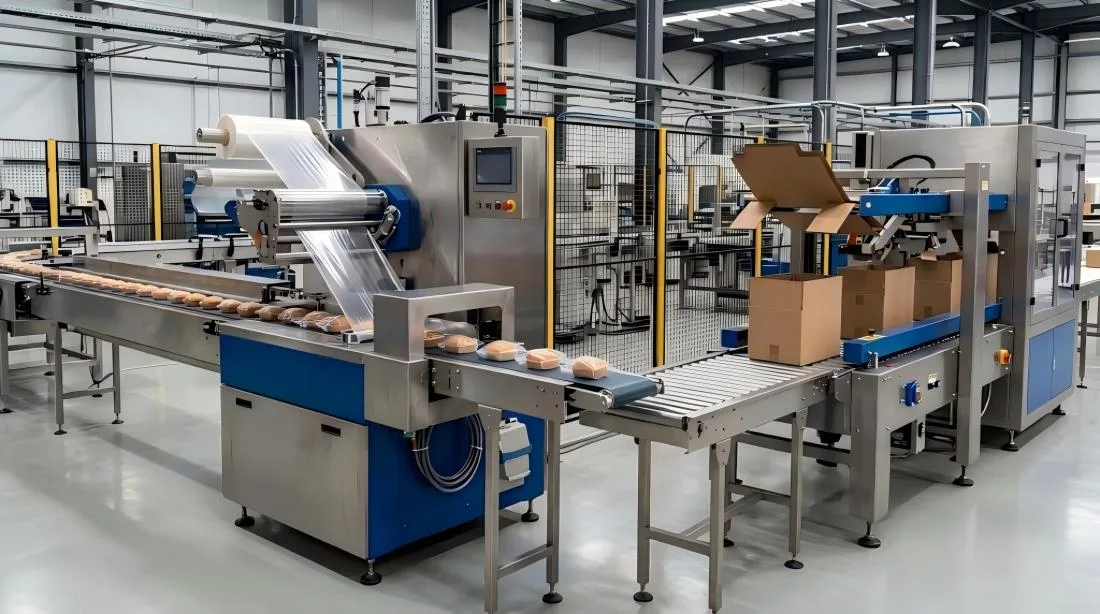
Cooling, slicing, and packaging sit between the oven and the shipping dock, and they must keep pace. If they fall behind, the whole line slows down. Products normally need to cool before slicing and wrapping, so plan cooling capacity alongside the machines.
Slicing and filling add value after baking. The HSENDA HC401 Horizontal Cutting Machine supports multi-section cutting without blade adhesion or compression distortion. The HSENDA SI260 Side Injecting Machine offers continuous side injection with ±0.5 g weight accuracy. Together, they cover slicing and filling for cakes, bread, croissants, and eclairs.
Packaging speed deserves a safety margin. Suppliers quoted by Baking & Snack suggest starting at 10% to 15% above oven output, but stress that product mix, changeovers, accumulation, and recovery speed can change the answer. Treat it as a first estimate, and ask suppliers to calculate it from your actual product and pack format.
For flow wrapping, the HSENDA UP450 Flow Wrap Packing Machine uses dual frequency conversion and a high-sensitivity photoelectric eye to track and seal products accurately. Each sealing temperature is controlled independently, so it works with different film materials. Confirm product suitability and film choice through a trial before purchase.
For boxed goods, the HSENDA SK20 Automatic Carton Erector forms cartons, and the HSENDA BS50 Automatic Box Sealing Machine folds the top cover and tapes the box. They can run as standalone machines or join an automated packaging line. Loading product into cartons is a separate step you need to plan.
A common problem in plant upgrades is buying isolated machines with mismatched capacities. For example, imagine a dough line rated at 2,000 kg per hour feeding an oven that bakes only 1,000 kg per hour. Unless the extra mixing capacity serves another line or a planned strategy, it may sit underused without raising this line’s output.
Start by comparing every station on the same product, output unit, and planned production time. Convert kg per hour, pieces per minute, and packs per minute to a common basis. Then estimate good output over the planned period as ideal rate times planned production time times OEE (overall equipment effectiveness), which includes availability, performance, and quality losses.
Treat the lowest result as a preliminary constraint, not a final answer. Then validate line output against buffers, changeovers, upstream starvation, and downstream blocking, ideally in a trial with your own product. Nameplate ratings rarely reflect how the whole line behaves together.
In an industrial bakery, cleaning time is lost production time. Hygienic design must match the intended cleaning method. Dry ingredient areas may need controlled dry cleaning, while equipment that handles wet fillings or creams may need validated wet cleaning. Confirm accessibility, drainage where needed, material compatibility, and full drying before restart.
The HSENDA SP660 Cake Depositor reflects this approach, with tool-free disassembly and no exposed screws for quicker cleaning. The HSENDA S50 Cream Whipping Machine uses FDA-certified, food-contact core components. Component certification does not replace your sanitation program or inspections.
When industrial equipment stops, losses add up by the hour. A part that must ship from overseas, or a slow-to-respond supplier, can turn a minor fault into days of lost output. The risk grows when a supplier lacks a clear service process or parts inventory.
Before you buy, get service terms in writing. Ask for response times, spare-parts availability, a recommended spare-parts list, training, and technical support channels. Some buyers formalize this in a service level agreement, which is worth requesting for critical machines.
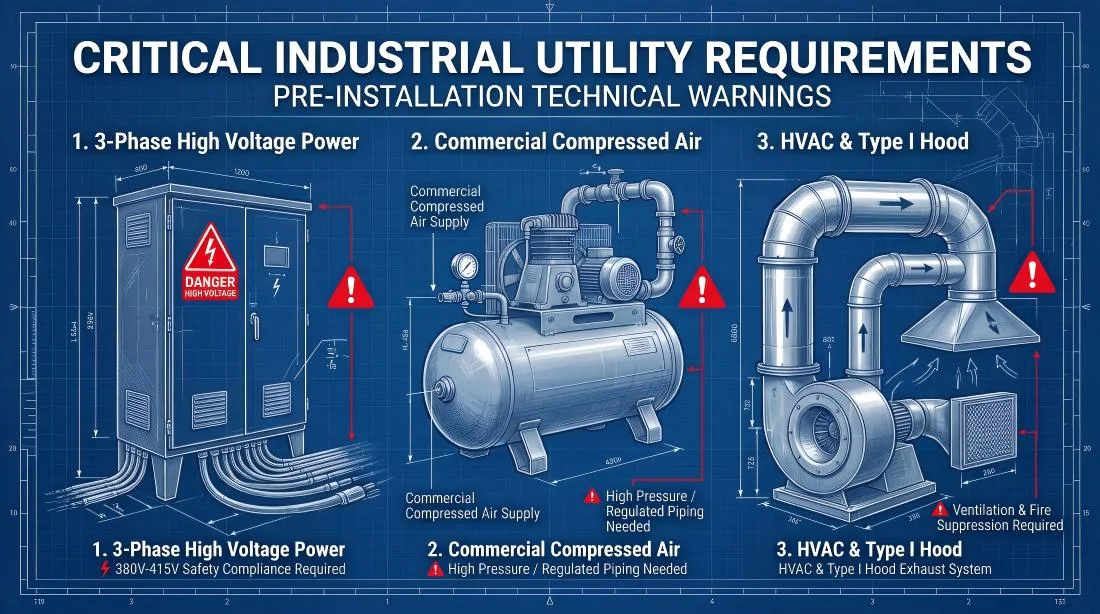
Upgrading to industrial automation takes more than measuring floor space. Industrial bakery machinery depends on specialized utilities, typically including three-phase power at industrial voltages, compressed air for pneumatic cylinders, and ventilation and cooling systems that can handle the extra heat. Check each machine’s specification sheet to see which of these it needs.
Audit your factory’s utility limits before you buy. List each machine’s voltage, phase, amperage, air pressure, and airflow, and ask suppliers to state the pressure and flow basis they use. Compressed air deserves extra attention, because it is one of the most expensive forms of energy in an industrial plant.
Skipping this step is a critical, expensive mistake. Imagine your new tunnel oven or flow wrap line arrives, and the building lacks the electrical amperage to run it. If the upgrade needs utility studies or a new transformer, the project may face substantial lead times, so ask your utility for a schedule before you pay.
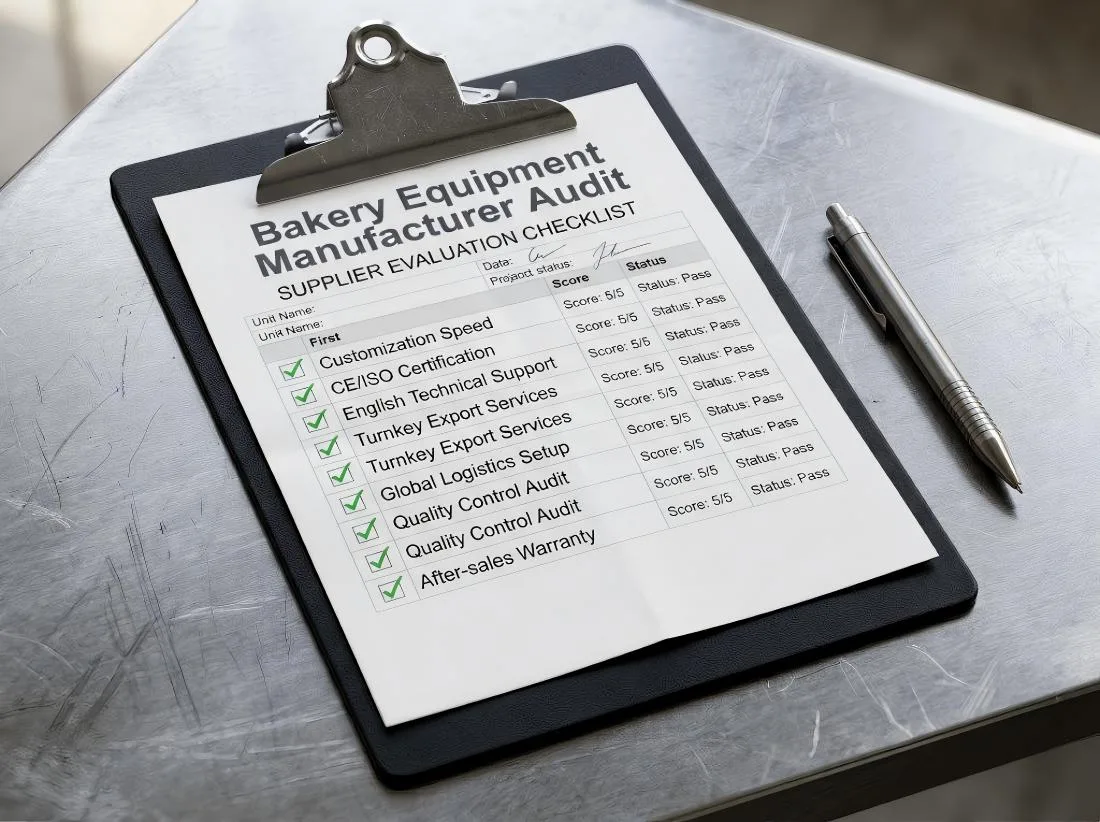
Choosing a manufacturer is a long-term partnership. You need a supplier who can deliver solutions that fit your floor plan and product mix, and who stays reachable after installation. HSENDA is our own brand, so use the examples below as a checklist for any supplier.
Use these four checks when you evaluate potential manufacturers:
Also insist on an acceptance test before final payment. Define your recipe, unit weight, target speed, pack format, and shift pattern in writing, then run your actual product under sustained conditions. Record yield, cleaning time, and changeover time, and keep the test video and report with your purchase file.
Standalone commercial equipment handles single tasks and relies on people to move product between machines. Industrial systems are built for sustained high volume, with more automation, integration, and shared controls, and they may use batch, continuous, or hybrid processes. Judge a system by capacity, integration, and handling, not by one-size figure.
Prices vary widely with capacity, origin, and whether equipment is new or used. Costs also depend on whether a quote covers a single station, a production module, or a fully integrated line. Request an itemized scope covering equipment, controls, installation, commissioning, and site requirements.
There is no single best machine. First choose the packaging format and closure method, then compare product handling, required output, changeover, and pack integrity. For heat-sealed flow wrapping, evaluate sealing temperature control and film compatibility. The HSENDA UP450 offers photoelectric tracking and independent sealing temperature control, so confirm suitability through a trial with your actual product.
Moving to industrial equipment is a significant step toward larger markets. Match capacities across the whole line, choose hygienic designs, and plan packaging and utilities alongside the main machines. These choices usually affect results more than any single machine does. Before committing capital, shortlist experienced manufacturers, request written service terms, and ask for a trial or references. A well-planned system protects your recipes, simplifies operations, and supports long-term profitability, as long as each station is sized for the line as a whole.